ConductVision Specification
Key Features
ConductVision provides a cost-effective, innovative, and state-of-the-art method to track the movement and behavior of your animal subjects. Developed using advanced AI technology at 30 plus frames per second (compared to the traditional 4-8 frames per second), ConductVision gives a seamless and accurate tracking experience through an intuitive user interface.
Track your animal models in various behavioral paradigms (see below for our packages). Versatile and comprehensive, one software package can be used with multiple paradigms on multiple computers.
ConductVision is easy to use with pre-defined paradigms which are ready to use. The available list of paradigms is ever-growing. Custom mazes are available on request. This is an ideal solution for users who are less acquainted with software development.
As a valued customer, you can be assured of 24/7 online support throughout your research journey with ConductVision. Updates and additional packages are available to you as standard.
Advantages
- The machine learning method we use to increase the accuracy of the tracking by:
- Automatically detecting multiple key body points for each subject compared to traditional contour-based (or outline) tracking of other tracking software packages.
- Tracking at 30 frames per second compared to other software packages which track at 6-8 frames per second.
- Batch processing allows the user to upload multiple videos simultaneously for analysis and results output.
- Our social interaction paradigm does not require tags or marking the subjects to track 11 key body points per subject.
- Seamless hardware integration with our mazes
- Adapts to lighting and camera conditions of your videos
- Custom features, paradigms, and mazes on request
- Competitive pricing
Hardware Specifications
| Specification | Details |
|---|---|
| Computer recommendations |
|
| Camera requirements |
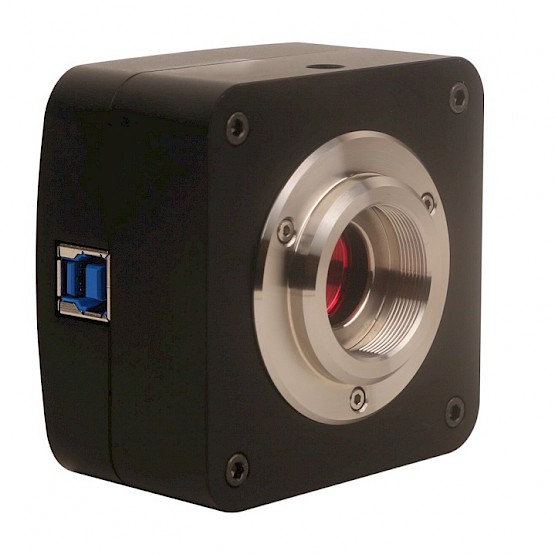
Recommended minimum camera specifications*:
*High-resolution cameras compatible with ConductVision are available upon request |
| Frame rate | 30+ frames per second |
| Subjects | Mice, Rats, Ferrets, Zebrafish, Drosophila |
| Additional software updates | Included, free of charge |
| Number of computers per licence | 1 |
| Infrared tracking capability | Yes |
| Video Source | Live video stream and accepted video files: .mp4, .avi |
| Data output | CSV. file (custom data output upon request) |
| Support | 24/7 online support via phone call or video call. On-site setup as per request. |
Rodent Mazes
- Barnes maze (with quadrant counts)
- Balance beam (foot slip and fall)
- Conditioned Place Preference Chamber
- Elevated Plus maze (with head dip count)
- Elevated Zero Maze (with head dip count)
- Horizontal Ladder (foot slip and fall)
- Morris Water Maze
- Light dark box
- Open field (including thigmotaxis, grooming and rearing)
- Open field set of 4
- Novel object recognition
- Novel object recognition set of 4
- Puzzle Box
- Radial arm maze (with user-defined arm entry)
- Sociability Chamber
- T-maze (with user-defined arm entry)
- Tail suspension
- Y-maze (with user-defined arm entry)
Specialty Mazes
- Active Place Avoidance
- Active/Passive Avoidance Shuttle Box
- Automated Y/T-mazes
- Automated CPP
- Empathy assay
- Gait Analysis
- Fear Conditioning Chamber
- Learned Helplessness
- Operant Conditioning
- Social Interaction Test (markerless)
- Step Down Apparatus
- Repeated Acquisition and Performance Chamber
- Visual Looming
- Custom maze requests (please enquire)
Zebrafish Mazes
- Social interaction- shoaling
- T maze
- Y maze
- Mirror biting pham
- 5CSRTT
- Swim tunnel
- Light Dark chamber
- Larval motility/activity
- Custom maze requests (please enquire)
Drosophila Mazes
- Open Field- circular or rectangular areas
- Maze array
- Heat maze
- Shallow Chamber
- Drosophila Visual and Olfactory Apparatus
- Custom maze requests (please enquire)